On 19 March 2026, an event organized by the GenderSAFE project titled “A Safer ERA: Strengthening National Frameworks Against Gender-Based Violence” took place in Brussels, to present new findings on national policies on gender-based violence in research and higher education. It brought together representatives from European institutions, national authorities and ministries, research and higher education organisations, and other stakeholders.
Opening: A shared commitment to safe research environments
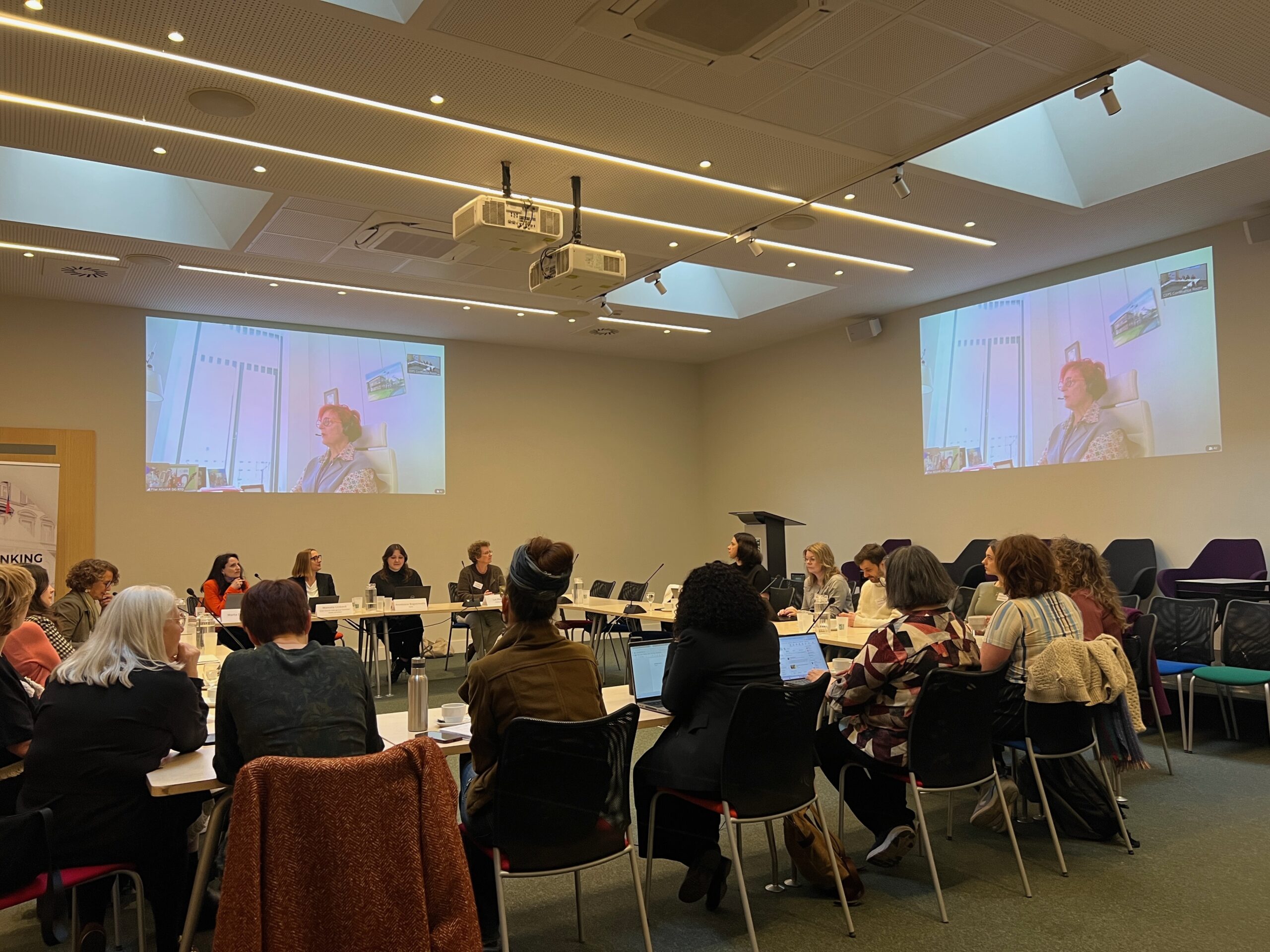
The event was opened by Maria Pilar Aguar Fernández (Director of Directorate D People: Health & Society, European Commission ), who underlined that addressing gender-based violence in research and higher education is not only a matter of justice, but a prerequisite for excellence in the European Research Area. She stressed that tackling gender-based violence requires coordinated action across the entire research and innovation ecosystem, including European institutions, national authorities and research organisations.
She highlighted the adoption of the Zero-Tolerance Code of Conduct as an important milestone at European level and noted the role of EU-funded projects, including GenderSAFE, in supporting progress by providing evidence, tools and opportunities for mutual learning. At the same time, she emphasised that real change must take place at national and institutional levels, and that understanding how countries address gender-based violence in their national frameworks is crucial for strengthening future action.
In this context, the GenderSAFE national policy mapping was presented as an important contribution, providing a picture of how national frameworks addressing gender-based violence are evolving across Europe. The insights generated through this work are expected to inform upcoming EU initiatives, including the future ERA Act and the Action Plan on Women in Research and Innovation.
In conclusion, Ms Aguar Fernández reiterated that progress towards excellence in the European Research Area depends on ensuring safe working conditions for all researchers, and that the common objective remains a research environment where “the people doing research, whoever they are, wherever they are, can do their work in an environment that is free from violence and free from discrimination.”
ERA policy context: A strengthening EU framework
Marcela Linková introduced the policy context for the event and the rationale for the GenderSAFE national mapping. She recalled that the UniSAFE project provided the first large-scale evidence on gender-based violence in research and higher education, showing that the problem is widespread and that institutional responses are often fragmented and insufficient.
She outlined recent developments at European level, including the 2021 Ljubljana Declaration on Gender Equality in Research and Innovation, the ERA Policy Agenda and the adoption of the Zero Tolerance Code of Conduct in 2024, which establishes a common framework for addressing gender-based violence through the three pillars of Commitment, Action and Accountability, building on the UniSAFE 7P framework.
In this context, the objective of the GenderSAFE national mapping was to analyse how countries address gender-based violence in their policy frameworks, assess how they align with the Zero-Tolerance Code of Conduct, identify gaps and support further coordination at European level. The mapping confirms that policy activity is increasing across Europe, but that national approaches remain diverse, and that the pillars of Commitment and Accountability are especially underdeveloped.
National policy mapping: An uneven landscape
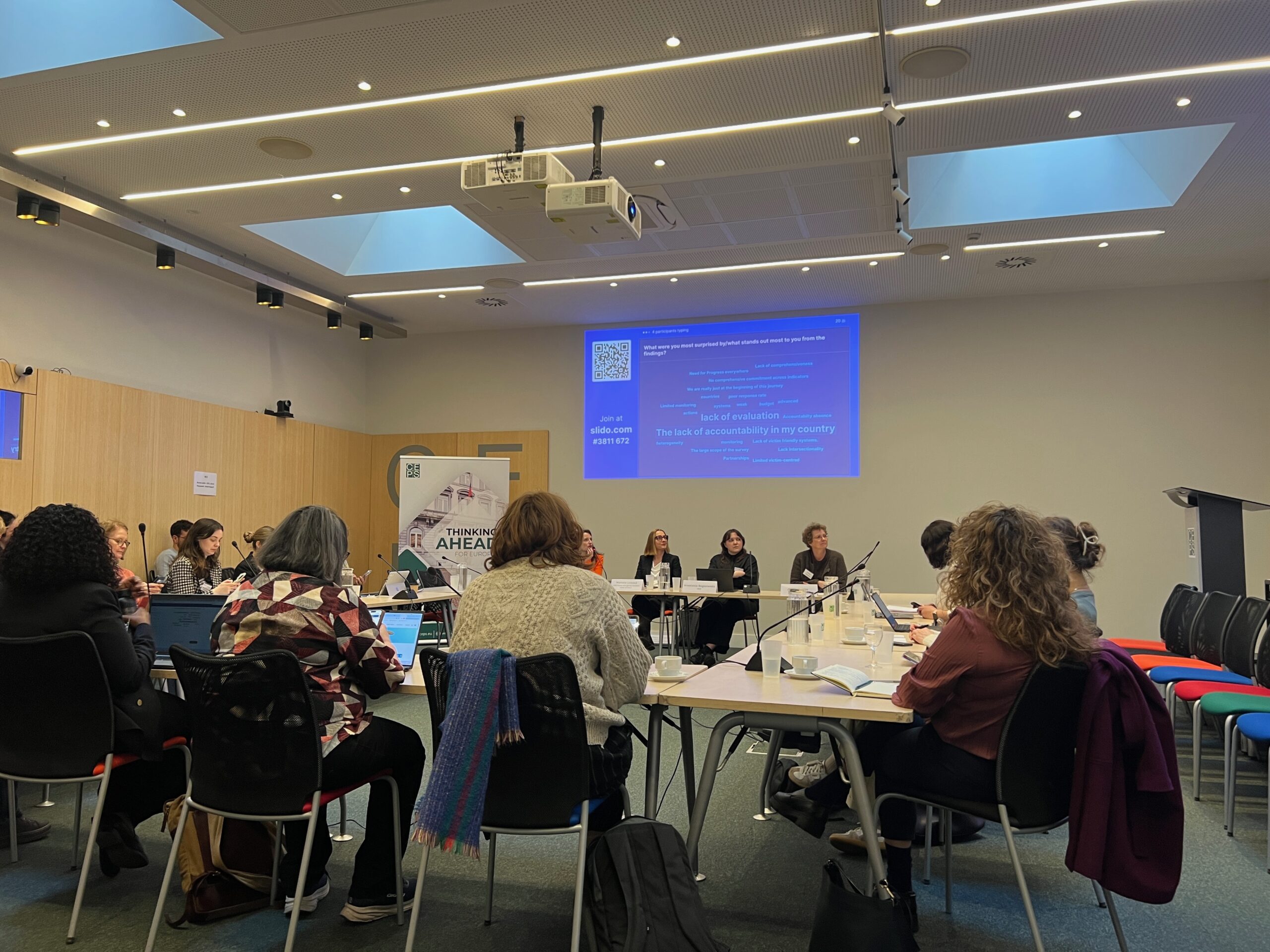
Anastasia Bogoslavets, one of the report’s authors, presented the main patterns of policy development across eighteen countries that participated in the monitoring study. With indicators structured along the three pillars of Commitment, Action and Accountability, Ms Bogoslavets walked the audience through the results across participating countries.
Several key findings were highlighted:
- 15 out of 27 EU countries responded to the GenderSAFE survey, and although not all countries are included, the evidence suggests that only a limited number of additional countries have dedicated policies in this area.
- The policy landscape is strongly heterogeneous, with policies dedicated to the domain of higher education and research tending to be more comprehensive, while general policy instruments often lack specific actions focused on higher education and research.
- The Accountability pillar remains underdeveloped, with weak monitoring, enforcement and follow-up mechanisms, limiting the effective implementation of policy commitments and actions.
- The Commitment pillar is the least developed, pointing to gaps in the explicit recognition of gender-based violence in national policy frameworks as a systemic, intersectional issue that requires victim-centred and trauma-informed approaches.
These findings underline the need for more coherent policy design and continued coordination at European level to support the development of comprehensive national frameworks.
The Institutional Self-Assessment Tool for institutional reflection
Yellow Window’s Lut Mergaert presented the GenderSAFE Institutional Self-Assessment Tool, designed as a developmental self-assessment instrument that helps institutions identify strengths and gaps in their current policies and procedures and supports further institutional development. The tool is intended as a reflective rather than compliance-driven exercise, enabling institutions to take stock of their current approach, including where policies and procedures may be unevenly developed or not fully aligned across the institution.
The Tool is structured around seven impact drivers and eighteen indicators. The assessment allows institutions to evaluate their level of development across six stages of institutionalisation and generates a report with tailored feedback and recommendations. These drivers and indicators cover key dimensions of institutional response and support the identification of priority areas for further action, while the staged model provides a clear framework for understanding progress over time.
Available online, the tool is intended to be completed by a small group within the institution and can be used to support internal reflection, strategic planning and monitoring of progress over time. Completing the tool as a group exercise can strengthen cross-institutional dialogue and help align different actors, while also providing a baseline for tracking progress and continuous improvement.
Round Table: Recent national developments and their drivers
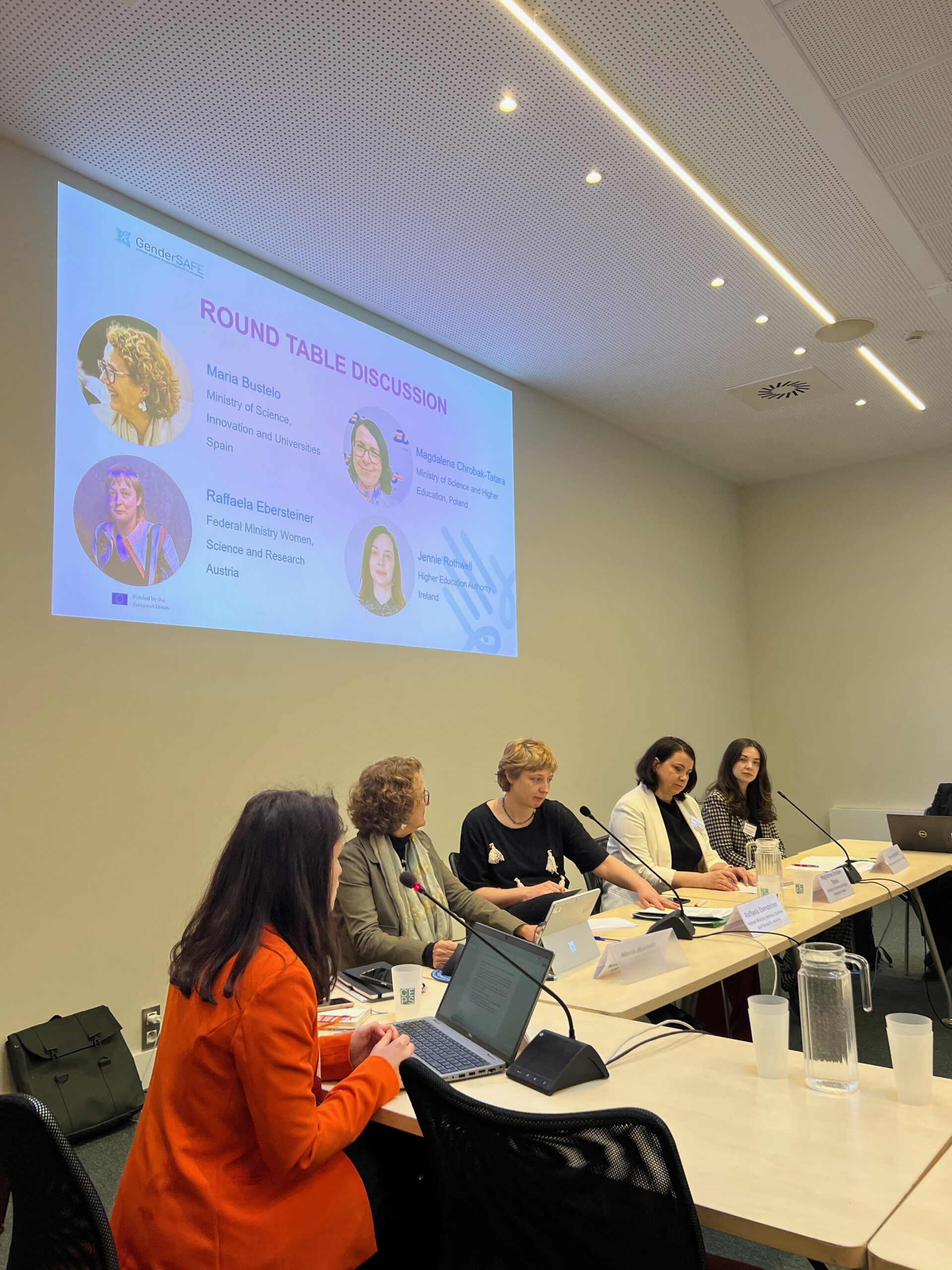
The round table discussion brought together Raffaela Ebersteiner (Federal Ministry Women, Science and Research, Austria), Jennie Rothwell (Higher Education Authority, Ireland), Magdalena Chrobak-Tatara (Ministry of Science and Higher Education, Poland) and Maria Bustelo (Ministry of Science, Innovation & Universities, Spain) to reflect on recent developments in national approaches to addressing gender-based violence in research and higher education. The discussion focused on recent policy developments and their enablers, cooperation with institutions, the role of EU-level coordination, and priorities for ensuring sustained implementation in the coming years.
Recent national developments and their drivers
Panellists highlighted a range of recent developments at national level, reflecting different approaches and stages of policy advancement.
In Poland, a new anti-discrimination package announced in 2026 introduces measures such as mandatory training, codes of ethics, gender equality plans and the establishment of an academic ombudsperson, following recommendations from advisory bodies and input from the academic community.
Austria has advanced through a strong evidence-led process: a national “status quo” survey based on the UniSAFE 7P framework mapped existing measures across HEIs and R&I, identifying gaps and variability in practice. The results are now being integrated into national action plans and are informing the development of a new policy framework, with a stakeholder working group convening to build shared understandings and approaches. Enablers included robust data, political will and a window of opportunity, and the ability to link ERA-level developments to national policy debate. Ireland is currently revising its national framework Safe, Respectful, Supportive and Positive (2019) including dedicated funding for response staff, national surveys and strengthened monitoring. The revised framework includes 12 updated actions and places greater emphasis on prevention, safety measures and institutional transparency. Emerging challenges such as stalking, cyber-harassment and mobile serial perpetration are being addressed more explicitly in the next cycle.
Spain presented a long-standing legislative approach based on mandatory institutional protocols, reinforced through updated legislation and extended coverage. At the same time, limitations in implementation were noted, including challenges related to formal procedures, under-reporting and the need for more flexible and victim-centred approaches.
Across the discussion, several enabling factors were identified, including strong evidence bases, political commitment, and sustained engagement with stakeholders. A shift in framing was also highlighted, with increasing recognition that institutions should be evaluated not by the absence of cases, but by how they respond to them.
Cooperation with institutions in practice
Panellists highlighted different models of cooperation between national authorities and higher education and research organisations, reflecting national governance structures and policy approaches.
In Ireland, cooperation is based on a strong tradition of consultation with the higher education sector. Policy development and revision are carried out through expert groups involving institutional leadership, response staff, students and other stakeholders. Monitoring is developed in collaboration with institutions, including through annual governance statements and self-assessment against the national framework, supported by a community of practice of institutional response managers.
In Austria, cooperation is structured through the ERA National Action Plan, which translates European Research Area priorities into national measures. Policy development is carried out with broad stakeholder involvement, and dedicated working groups are being established to develop shared definitions, common standards and coordinated implementation mechanisms across the sector.
In Spain, cooperation takes place within a decentralised system, with the ministry acting as a coordinating and mediating body. This includes technical networks of equality units, coordination with institutional leadership through the conference of rectors, and engagement with a wider ecosystem of actors, including the accreditation agency, the national research funder and research organisations.
In Poland, cooperation focuses on advisory bodies, consultations and practical support measures. The ministry supports training programmes, institutional projects and awareness-raising initiatives, including targeted activities to build capacity and support institutions in addressing gender-based violence in practice. A GEP monitoring study also created space for institutions to reflect on implementation barriers and the wellbeing of equality officers.
Across all cases, cooperation was identified as essential for ensuring that policies are not only developed at national level, but effectively implemented within institutions.
EU coordination as a key enabler
There was a strong agreement among the panellists that EU-level coordination played an important enabling role even if many national policies have developed in parallel to EU initiatives.
Across countries, the ERA Policy Agenda and the Zero-Tolerance Code of Conduct were highlighted as providing a shared political framework and common reference point, helping to strengthen national arguments and position gender-based violence as a systemic issue at European level.
EU-level data and research, particularly through projects such as UniSAFE, were also identified as important in making gender-based violence visible and comparable across countries, reinforcing the need for action.
In several countries, the gender equality plan (GEP) eligibility criterion in Horizon Europe was highlighted as a key driver of institutional change, encouraging the development and implementation of policies.
Also, EU-level collaboration, including through projects and communities of practice, was seen as valuable for mutual learning, exchange of practices and benchmarking progress across countries.
Finally, EU coordination strengthens the case for sustained action and helps resist policy weakening by anchoring national progress in wider ERA commitments.
Priorities for sustaining implementation
In the final round, panellists identified key priorities for the next 12–18 months to support sustained implementation of policies addressing gender-based violence.
Several speakers emphasised the need to strengthen monitoring and evaluation, as well as to move beyond existing policy instruments towards more comprehensive approaches. Ensuring long-term sustainability and preventing policy backsliding were also highlighted as key challenges.
At national level, priorities include translating existing evidence and policy commitments into concrete measures, strengthening cooperation with stakeholders, and continuing the implementation of recent policy initiatives.
In Austria, the immediate priority is to translate the national survey results into clear commitments, shared definitions and minimum standards, moving to coordinated implementation mechanisms that reduce fragmentation and dependence on individual actors. Building a shared understanding of gender-based violence across the sector is a practical next step. This is framed as essential to ensuring consistency in reporting, support structures and institutional expectations across the system.
Spain, in turn, prioritises strengthening monitoring of implementation and evaluating the effectiveness of existing protocols in practice. A key next step is to move beyond protocol-based approaches towards broader action plans that address gaps and limitations in current instruments.
In Ireland, the focus is on strengthening prevention and response capacity, alongside clearer monitoring tools and institutional transparency.
At EU level, panellists pointed to the importance of continued coordination and support, including through the forthcoming ERA Act, as well as stronger collaboration on specific approaches such as trauma-informed responses.
Audience discussion and cross-cutting challenges
The audience discussion raised a number of cross-cutting issues related to the implementation of policies addressing gender-based violence. Questions focused in particular on terminology, the transferability of tools, and the integration of approaches such as victim-centred and trauma-informed responses.
Participants also highlighted broader structural challenges, including data gaps, uneven political will, and the risk of policy backsliding in changing political and funding contexts. The importance of accountability, both at institutional and leadership level, was emphasised throughout the discussion.
Several contributions pointed to the role of EU-level instruments and collaboration in supporting progress, including through shared standards, funding requirements and opportunities for mutual learning. At the same time, participants stressed the need to embed responsibility within institutions and to strengthen partnerships across stakeholders, including students and civil society.
Closing: Looking ahead in the ERA
In her closing remarks, Marcela Linková reflected on the discussion and situated it within the broader trajectory of the GenderSAFE project and ongoing developments at European level. She highlighted the key outputs of the project, including the Institutional Self-Assessment Tool, the training programme and the Model Policy Framework, and noted their role in supporting institutions in strengthening their responses to gender-based violence.
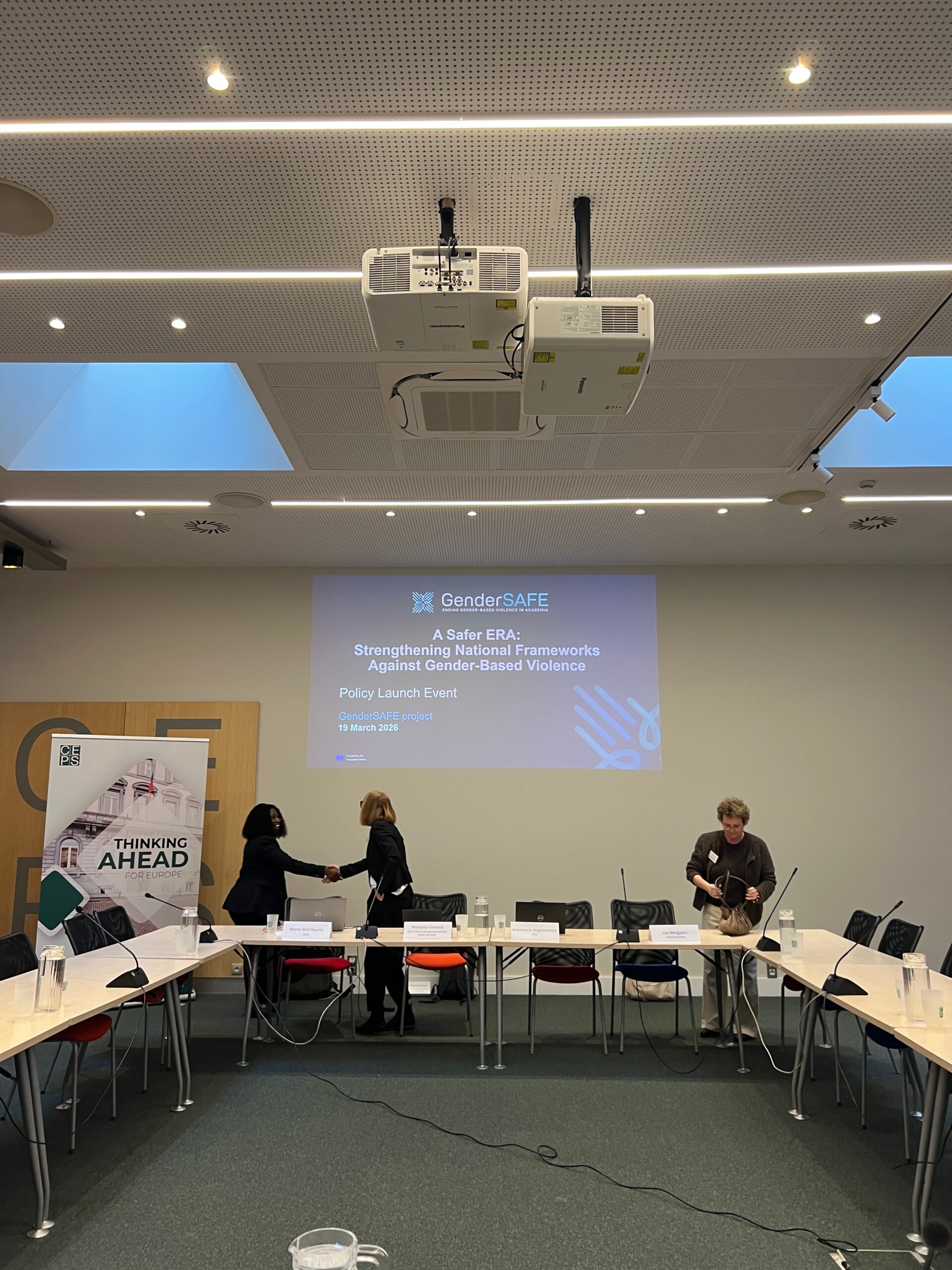
Looking ahead, she emphasised that the coming period represents an important policy juncture in the European Research Area, with several key policy initiatives under development. In particular, she pointed to the ERA Act, the forthcoming Action Plan on Women in Research, Innovation and Start-ups, and the preparation of the next Framework Programme (Horizon Europe 2028–2034) as critical opportunities to further advance this agenda.
She closed by inviting participants to remain engaged in this work, including through upcoming project activities and the final GenderSAFE conference in January 2027.